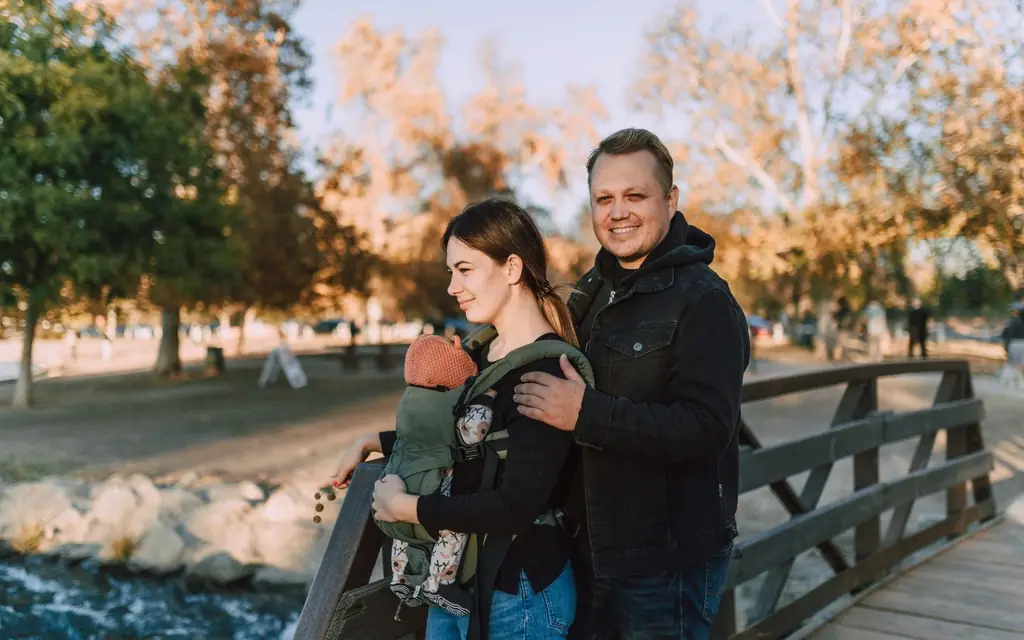

Border officers on both sides of the Niagara River pay close attention to children. Their job includes making sure a child is travelling with the knowledge of the people responsible for them, which is why a parent travelling alone with a child, grandparents taking the grandchildren to see the Falls, or a coach with a youth team may be asked for more than a passport. The document that most often settles it is a consent letter. This page explains when a child consent letter is needed for crossing the border at Niagara, what to put in it, and what ID children need in each direction. NiagaraFallsLimo.net carries families across these bridges with child seats already fitted; the paperwork is yours to bring.
Do I need a consent letter to cross the Niagara border with a child?
Not by law in Canada, but strongly advised: carry a signed, ideally notarized, consent letter whenever a child under 19 crosses without both parents or legal guardians, even on a day trip. Officials may ask for it. The Rainbow Bridge is under 2 km from the Falls. NiagaraFallsLimo.net provides child seats and crosses with you; book online.
Canada's Global Affairs department puts it plainly on its consent letter page: a letter is not legally required in Canada, but immigration authorities and border officials may ask for one, and not having it can mean delays or a refusal to enter or exit a country.
When to carry a consent letter
Carry one if any of these apply to a child under 19:
- the child is travelling with only one parent or person with decision-making responsibility;
- the child is travelling with grandparents, an aunt or uncle, an older sibling, family friends or anyone who is not a parent or guardian;
- the child is travelling alone;
- the child is travelling with a school, sports, religious or youth group;
- parents share custody and the other parent is not in the vehicle.
Teenagers are included. Global Affairs notes that 16- and 17-year-olds who hold an adult passport may still be asked for a letter. The Canada Border Services Agency (CBSA) gives the same advice for travellers entering Canada: carry a consent letter if you share custody and the other parent is not travelling with you, or if you are not the child's parent or legal guardian.
What the letter should say
There is no official wording, but Global Affairs lists what a useful letter includes:
- the child's full name;
- the names and contact details of the parents or decision-makers who are not travelling;
- the accompanying adult's full name, address, contact details and relationship to the child;
- where the child is going, for how long, and the specific dates.
If children travel separately for part of the trip, prepare a separate letter for each part. Global Affairs publishes a template in two formats: an interactive PDF to fill in on screen and a Word version to complete by hand. For a Niagara trip, name both sides if you will cross back and forth: "Niagara Falls, Ontario, and Niagara Falls and Buffalo, New York".
Signing, witnessing and notarizing
The letter should be signed by each parent or decision-maker who is not travelling. Any adult may witness the signature, but Global Affairs strongly recommends a notary public, and CBSA says that to avoid delays you should have your consent letter notarized to support its authenticity. Bring the original signed copy; photocopies and digital versions may be questioned. A parent who lives abroad can have the letter witnessed at a Canadian embassy or consulate for a fee.
On the US side, CBP's visitor guide makes the same point in its own words: if a child is accompanied by only one parent, the adult should have a notarized note from the child's other parent, and grandparents, relatives or friends travelling with a child should carry a note signed by both parents.
Children's ID for entering Canada
CBSA treats anyone under 18 as a minor and asks that:
- every child carries acceptable identification for their status, a passport being the strongest;
- you carry copies of any legal custody documents, if applicable;
- you arrive at the border in the same vehicle as the child.
That last point matters for split-vehicle trips. If one parent drives the luggage and the other brings the children in a chauffeured car, the children should be in the vehicle with the adult who holds their documents and letter. Full adult requirements are on documents for entering Canada, and CBSA's own travel documents page has the official text.
Children's ID for entering the United States
US Customs and Border Protection's WHTI rules allow US and Canadian citizen children under 16 arriving by land or sea to show only a birth certificate or other proof of citizenship. The birth certificate may be an original, a photocopy or a certified copy. Children from other countries need their own passport and US authorization, a visa or an approved ESTA, just like adults. More detail is on documents for entering the USA.
A passport is still the simplest choice for a child. It works in both directions, on flights, and at a hotel desk if anyone asks.
Custody orders, separated and divorced parents
If parents are separated or divorced, carry:
- copies of the custody order, parenting plan or court document that sets out decision-making responsibility;
- a consent letter from the other parent, unless the order gives you sole authority to travel;
- the child's own ID.
Global Affairs also recommends legal advice for specific family situations. If a court order restricts travel outside Canada or the US, the order governs; a letter does not override it. A consent letter shows permission; it does not guarantee that a child won't be taken abroad without consent, and border officials may still ask questions.
School, sports and youth groups
Groups are common at Niagara: hockey tournaments, school trips, choirs, dance teams. For entry into the United States, CBP allows children under 19 in a school, religious, social, cultural or sports group to use a birth certificate or proof of citizenship. The supervising adult should carry a letter on the organization's letterhead and a written, signed statement certifying parental or legal guardian consent for each child. Global Affairs adds that Canadians under 19 travelling to the US with a school or organized group must travel with written consent from their own parent or guardian.
For a group, prepare a folder: the letterhead letter, the signed consents, a passenger list, and every child's ID in the same order as the list. It makes the booth faster for everyone.
NEXUS for children
Children can hold NEXUS cards, with no fee under 18, but each child needs their own card for the family to use a NEXUS lane, because every occupant must be a member. For a NEXUS child in shared custody, CBSA asks for the child's NEXUS card, custody documents and a letter of permission from the absent parent with contact addresses and phone numbers. At the NEXUS interview itself, a consent letter is needed if only one custodial parent attends. Our NEXUS and trusted travellers guide explains the program.
Child seats and the chauffeured crossing
The other half of family travel is the car itself. When you book with NiagaraFallsLimo.net, the booker lets you add child, toddler and booster seats, so the seats are fitted before the chauffeur arrives. At the bridge, the chauffeur joins the general lane, and you hand over each family member's documents and letters when asked. Officers sometimes speak to older children directly; let them answer.
Distances that families most often ask about, approximate by route planner and before the border queue:
- Buffalo Niagara International (BUF) to the Falls in Ontario: about 42 km (26 mi), usually 40–45 minutes.
- Niagara Falls, Ontario to Niagara Falls State Park, NY: about 3 km (2 mi), usually under 10 minutes via the Rainbow Bridge.
- Toronto Pearson (YYZ) to the Falls: about 121–130 km (75–81 mi), usually 1 h 30 – 1 h 40 off-peak, no border involved.
Many families start in Toronto, stay at a Fallsview hotel and spend a day on the American side at Niagara Falls State Park. Our families page has more ideas.
Reserve a car with child seats
Family options for a border crossing compared
| Mode | Door-to-door time | Cost note | Luggage | Best for |
|---|---|---|---|---|
| Rideshare | Uncertain; drivers may not cross, and child seats are not guaranteed | Surge pricing | Car boot | Adults without children |
| Taxi | Drive plus border, if the cab crosses; seats vary | Metered | Car boot | Short trips with older children |
| Bus or train | Timetable plus inspection of everyone aboard | Published seat fare | Generous | Families happy to travel on a schedule |
| Driving yourself | Drive plus queue; you fit the seats | Fuel, toll into Canada, parking | Whatever fits | Local families with their own car |
| Private chauffeur (NiagaraFallsLimo.net) | Drive plus queue, door to door, seats pre-fitted | Fixed fare via booker | Sized to the vehicle class, SUVs for strollers | Young children, grandparents, luggage, airport runs |
When another option is the better choice
A family that lives in the region and has its own car seats will often simply drive. With older children and light bags, a day walk across the Rainbow Bridge to the American Falls is a memorable outing. Families comfortable with timetables can use the GO train from Toronto to Niagara Falls, Ontario, and stay on the Canadian side.
A chauffeur makes the most sense with infants and toddlers who need proper seats, with a stroller and several suitcases, with grandparents travelling with grandchildren, after a long flight, or when the group is too large for one taxi. Our chauffeur vs taxi vs rideshare guide compares them honestly. For larger family gatherings, see group transportation, and our cross-border car service explains crossings.
Who this page is for
- Individuals: a single parent taking a child to the Falls, or a grandparent travelling with a grandchild.
- Couples: parents planning a visit with a baby and checking whether a birth certificate is enough.
- Families: blended families with shared custody arrangements.
- Groups: coaches, teachers and chaperones with teams or classes.
How to book a family crossing in 3 steps
- Enter the pickup and drop-off, on either side of the border, with date, time and flight or train number.
- Choose a vehicle with room for everyone and the stroller; each class shows a fixed fare.
- Add passengers, bags and the right child, toddler or booster seats, plus meet & greet if you are arriving by air, then pay securely and receive the confirmation by email.
New to booking a chauffeur? Read how to book a limo. Cancellation counts from scheduled pickup: over 72 hours' notice free; 72 hours or less 10%; 48 hours or less 50%; 24 hours or less or no-show 100%.
Frequently asked questions
Is a consent letter legally required to cross into Canada with a child?
No. Global Affairs Canada says a consent letter is not legally required in Canada. Border officials may still ask for one, and without it a family may face delays or refusal. Carry one whenever a child under 19 travels without both parents or guardians.
Does a consent letter need to be notarized?
It is not mandatory, but both governments recommend it. CBSA advises notarizing the letter to support its authenticity and avoid delays, and Global Affairs strongly recommends a notary as witness. CBP's visitor guide also suggests a notarized note from the absent parent.
What ID does a child need to cross from Canada to the US by car?
US and Canadian citizen children under 16 need only a birth certificate or other proof of citizenship, which may be an original, photocopy or certified copy. Children of other nationalities need their own passport and US authorization. A passport is the simplest option in both directions.
Do grandparents need a letter to take grandchildren across the border?
Yes, it is strongly advised. Global Affairs recommends a letter for any child travelling without both parents, and CBP's guide suggests a note signed by both parents when a child travels with grandparents or other relatives. Bring the child's ID and the parents' contact details.
What if the other parent will not sign a consent letter?
Carry your custody order or court document showing your decision-making responsibility, and get legal advice before travelling. If an order restricts travel, it governs. Officers decide each case; a family without the letter may be delayed or refused.
Does a teenager need a consent letter?
Possibly. Global Affairs recommends a letter for children under 19 travelling without both parents, and notes that 16- and 17-year-olds with adult passports may still be asked for one. A short signed letter avoids awkward questions at the booth.
Can my child sit in a car seat in a chauffeured car across the border?
Yes. The NiagaraFallsLimo.net booker includes child, toddler and booster seats, so they are installed before pickup. The child stays seated through the crossing while you hand documents to the officer when asked.
Do children need their own NEXUS card?
Only if you want to use a NEXUS lane, because every occupant must be a member. Children under 18 join without a fee but need their own application, interview and card. Otherwise they cross with their passport or birth certificate. The border crossing hub links every guide.