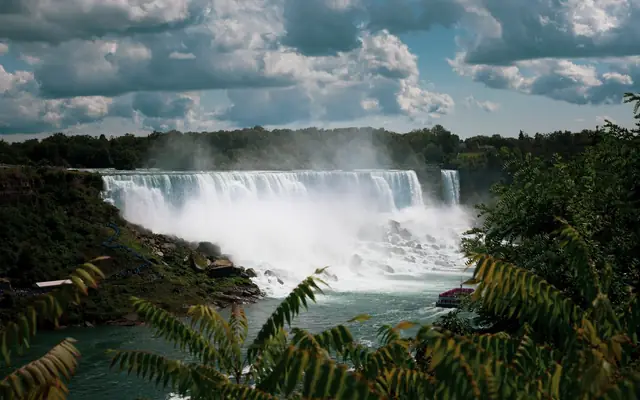
Visiting Niagara Falls from overseas means planning for an international border. The Horseshoe Falls and the best panoramic views are on the Canadian side, in Ontario; the American Falls, Goat Island and the Cave of the Winds are on the New York side. Visitors from the UK, Europe, Asia, Australia, Latin America and elsewhere often want both, and a single afternoon can involve leaving Canada, entering the United States and coming back. This page sets out the entry rules for each country as they stand in October 2026, using the official pages of Immigration, Refugees and Citizenship Canada (IRCC), the Canada Border Services Agency (CBSA) and US Customs and Border Protection (CBP). NiagaraFallsLimo.net drives overseas guests from Toronto Pearson, Buffalo Niagara and the hotels, and the chauffeur crosses the bridge with you; the paperwork, though, belongs to each traveller.
This is a practical summary, not legal advice. Your nationality, passport and travel history decide what applies to you, and the border officer makes the final decision.
What do overseas visitors need to see both sides of Niagara Falls?
Overseas visitors need a passport plus Canada's entry document (an eTA to fly in, or a visitor visa if your nationality requires one) and, for the New York side, an approved ESTA or a US visa and an I-94. NiagaraFallsLimo.net drives Toronto Pearson to the falls, about 120–125 km (75–78 mi), and books online at a fixed fare.
The sections below explain each document, the order in which you will need them and how a typical two-country trip runs.
Entering Canada: eTA or visitor visa
Canada splits foreign visitors into two groups:
- Visa-exempt nationals (for example many European and Commonwealth passports) need an Electronic Travel Authorization (eTA) to board a flight to Canada. IRCC lists the eTA fee as CA$7 as of 2026. Importantly, IRCC says that in most cases travellers from eTA-required countries who arrive by car, bus, train or boat do not need an eTA. If you fly into New York or Buffalo and enter Canada over a Niagara bridge, the eTA is generally not required for that land entry.
- Visa-required nationals need a visitor visa (temporary resident visa) whichever way they arrive, including by land at Niagara.
US citizens do not need an eTA. US lawful permanent residents have been exempt from the eTA since April 26, 2022, but must carry their passport and proof of US permanent residence. IRCC's eTA eligibility page has the country lists.
Flying into Toronto Pearson or Billy Bishop, you may also submit the optional ArriveCAN Advance Declaration for customs. It works only at participating airports; it cannot be used at the Niagara land crossings.
Coming back into Canada after a day on the US side
This is the question overseas visitors ask us most. The answer depends on your entry document:
- Multiple-entry visitor visa: you can leave and return as long as the visa has not expired.
- Single-entry visitor visa: IRCC says you can ask to return on your original visa, even if it has expired, if you visit only the United States (or St. Pierre and Miquelon) and come back before the end of your approved stay in Canada. See IRCC's answer on leaving Canada and coming back.
- Visa-exempt travellers: returning by land does not normally require an eTA, as above.
In every case the officer at the Canadian booth decides. Carry the documents you used to enter Canada the first time, plus your passport, and know the date your authorized stay ends.
Entering the United States: ESTA or US visa
For the New York side, overseas visitors fall into two groups again:
- Visa Waiver Program (VWP) nationals need an approved ESTA before arriving at a US land border. CBP's I-94 page says so plainly, and CBP's ESTA FAQs confirm that ESTA authorization is required before presenting at a land port of entry. An approved ESTA is typically valid for two years, or until your passport expires if that comes first. The ESTA fee rose to US$40 on September 30, 2025, according to the Federal Register notice.
- Everyone else needs a US visa, usually a B-1/B-2 visitor visa, obtained in advance from a US embassy or consulate.
An ESTA is an authorization to travel, not a guarantee of entry; CBP officers decide admissibility on arrival. VWP stays are limited to 90 days. The US State Department says a short trip to Canada during a VWP stay generally does not restart the 90 days, so the whole stay, including time in Canada, should fit within the original period.
The I-94 at the Niagara bridges
The I-94 is the US arrival record. At land borders it is now issued electronically, with no paper stub.
- Apply in advance through CBP's I-94 website or its app, which CBP now calls CBP Link (it was previously CBP One, then CBP Home). A provisional I-94 filed in advance expires unless you present for inspection within seven days, and you still have to appear in person at the booth.
- The fee for an I-94 at a land border has been US$30 since September 30, 2025 (the old US$6 fee plus a US$24 increase).
- Keep a copy of your I-94 details on your phone, since there is no paper record.
Travellers who plan to stay in the US for 30 days or more should also read the US Citizenship and Immigration Services page on registration, which applies to some non-citizens aged 14 and over.
Which airport should overseas visitors fly into?
- Toronto Pearson (YYZ) is the usual choice if you will spend most of your time in Canada. Toronto Pearson to the falls is about 120–125 km (75–78 mi), usually 1 h 30 – 1 h 45 off-peak; allow two hours or more on a summer Friday. You clear Canadian entry at the airport and only need US documents if you cross the river. Our Toronto Pearson transfer page covers the arrival routine.
- Buffalo Niagara (BUF) suits itineraries that start in the United States or continue to New York City. Buffalo Niagara to Niagara Falls, Ontario is about 40–45 km (25–28 mi), usually 45–60 minutes plus the border queue, and you will clear two entries: the US at the airport and Canada at the bridge. See our Buffalo Niagara airport transfer.
- Hamilton (YHM) is about 90 km (56 mi) from the falls, usually 1 h 15 – 1 h 30, and handy for some domestic and sun connections. See our Hamilton airport page.
At Pearson, pre-arranged cars meet guests at Terminal 1 Door A and Terminal 3 Door A. Our meet and greet service adds a chauffeur with a name board inside arrivals, which first-time visitors after a long-haul flight usually appreciate.
A typical two-country day with a chauffeur
A common plan for a family from overseas staying on the Canadian side:
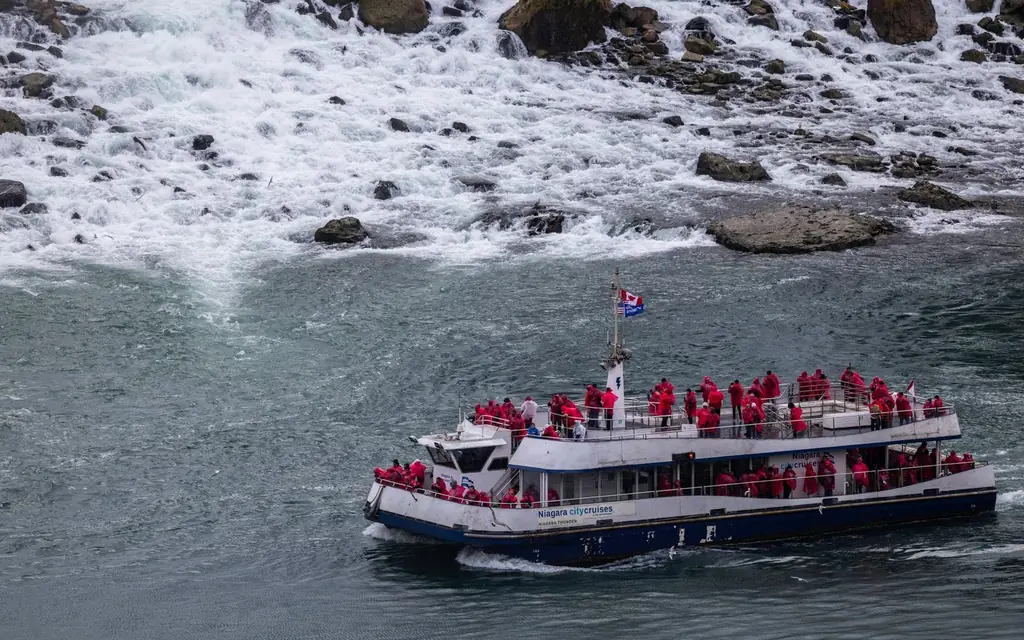
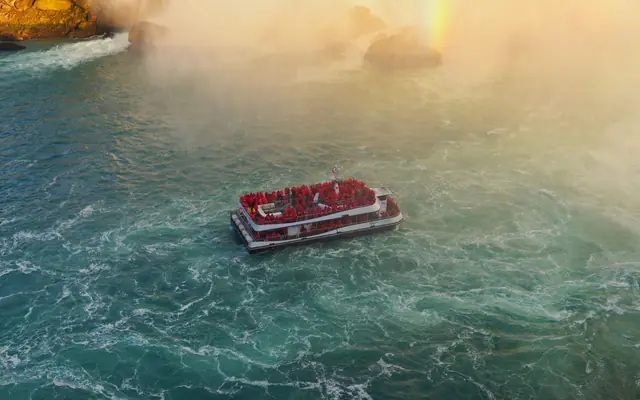
- Morning in Canada: Journey Behind the Falls at Table Rock, then the Niagara City Cruises boat into the mist.
- Midday crossing: the chauffeur drives over the Rainbow Bridge. Everyone presents passports, ESTA or visa, and I-94 details at the US booth. Nobody can predict how long the queue will take, so keep the afternoon flexible.
- Afternoon in New York: Niagara Falls State Park, Goat Island and the Cave of the Winds. Maid of the Mist's operator reminds visitors that crossing from Canada requires valid documents.
- Evening return: back over the bridge into Canada, where the CBSA officer checks Canadian entry documents again, then dinner and the illuminated falls.
Our Rainbow Bridge guide explains tolls and lanes, and Canadian side vs American side helps you decide how much time to give each. On the US side, start with our guides to Niagara Falls State Park and the Cave of the Winds.
Lanes, NEXUS and your chauffeur
Overseas visitors are rarely NEXUS members, and that matters for the route. A car may use a NEXUS lane, or the NEXUS-only Whirlpool Rapids Bridge, only if every occupant, including the driver, is a NEXUS member carrying their card. With overseas guests aboard, the chauffeur uses the general lanes at the Rainbow, Lewiston-Queenston or Peace bridges. Read more in our NEXUS and trusted traveller guide.
At the booth, the chauffeur lowers the windows and hands up nothing on your behalf except what the officer asks for. Each person answers for themselves. Officers may refer a car to secondary inspection; that is routine and simply means the officer needs more time with someone's documents.
Customs, money and other practical points
- Declare goods on each entry. Our duty-free and declarations guide explains the allowances for visitors and residents in both directions.
- Cannabis must never cross the border in either direction, whatever its legal status on each side.
- Cash: declare CA$10,000 or more entering or leaving Canada; report more than US$10,000 entering the US.
- Two currencies: prices in Ontario are in Canadian dollars and usually exclude the 13% HST, the harmonized sales tax added at the till. Prices in New York are in US dollars, with state and local sales tax added.
- Electronic devices: Global Affairs Canada advises that US border officers may search phones and laptops and ask for passwords.
- Children: each child needs their own passport and entry document. If a child travels without both parents, carry a consent letter; see our crossing with children page.
Onward trips from Niagara
Many overseas itineraries continue after Niagara. Common chauffeured legs include Niagara Falls to New York City, which needs US entry documents in order, and Niagara Falls to Ottawa and Montreal, which stays in Canada. Wine country is a short drive north; our Niagara-on-the-Lake wine tour is a favourite last day before flying home from Pearson.
Ways to see both sides compared
| Mode | Door-to-door time | Cost note | Luggage | Best for |
|---|---|---|---|---|
| Walking the Rainbow Bridge | walk plus inspection queue | pedestrian toll US$1.00 or CA$1.25, collected on the Canadian side when walking into the US, as of 2026 | day bag | confident travellers with documents ready |
| Bus or rail between Toronto and the US | fixed schedules; border inspection en route | fare set by the operator | one or two bags | solo travellers on a budget |
| Taxi | short hops; may not cross | metered | trunk space | trips that stay on one side |
| Rideshare | varies; may not cross | surge pricing at busy times | trunk space | trips that stay on one side |
| Rental car | the drive plus the queue | rental and fuel; car toll US$6.00 or CA$8.50 entering Canada at NFBC bridges, as of 2026 | your trunk | travellers comfortable driving abroad |
| Private chauffeur | door to door, both sides | fixed fare via booker | sized to your group | families, first-time visitors, airport arrivals, long-haul jet lag |
If you are travelling light and only want a quick look at the American Falls, walking across the Rainbow Bridge with your documents in hand works well. A rental car is fine for confident drivers who have checked that the rental company allows cross-border travel. Niagara Falls International Airport warns that rideshare services may not cross the border. A pre-booked chauffeur is the calmer choice for families with car seats, groups, guests arriving after a long-haul flight, and anyone who wants one driver who knows both bridges. More in chauffeur vs taxi vs rideshare and on our cross-border car service page.
Who this suits
- Individuals: a sedan from Pearson with meet and greet, and a driver who explains the bridges as you go.
- Couples: both sides of the falls in one day, then dinner back in Ontario. See Niagara Falls for couples.
- Families: child seats fitted, every passport in one folder, one car for both entries.
- Groups: a Sprinter for a tour group or extended family, crossing together in the general lanes.
How to book a two-country trip in 3 steps
- Enter your pickup (airport with flight number, hotel or address) and drop-off, or choose "By the hour" for a two-country day; add the date and time.
- Choose the vehicle class; each shows its fixed fare before you pay.
- Add every passenger, bags, child seats and meet and greet, pay securely and keep the email confirmation. Check each traveller's documents against our entering Canada and entering the USA pages before the day.
Reserve your chauffeur for both sides
For general booking questions see how to book a limo, and for every crossing in the region, the border crossing hub.
Frequently asked questions
Do I need an eTA to enter Canada at Niagara Falls by car?
In most cases, no. IRCC says travellers from eTA-required countries arriving by car, bus, train or boat generally do not need an eTA; it is required to board a flight to Canada. If your nationality requires a Canadian visitor visa, you need that visa whichever way you arrive, including over a Niagara bridge.
Do I need an ESTA to visit the American side of Niagara Falls?
If you travel under the Visa Waiver Program, yes. CBP says VWP travellers need an approved ESTA before arriving at a US land border. Travellers from countries outside the program need a US visa. You will also need an I-94, which you can apply for in advance online.
How much is the I-94 at the Niagara border?
The land-border I-94 fee has been US$30 since September 30, 2025, made up of the earlier US$6 fee plus a US$24 increase. You can apply in advance through CBP's I-94 website or the CBP Link app, but you must present for inspection within seven days.
Can I go to the US side for the day and come back to Canada on a single-entry visa?
IRCC says you can ask to return on your original single-entry visitor visa, even if it has expired, if you visited only the United States and you return before your approved stay in Canada ends. The border officer makes the final decision, so carry your visa, passport and entry details.
Is it better to fly into Toronto or Buffalo for Niagara Falls?
For overseas visitors staying mainly in Canada, Toronto Pearson is simpler: about 120–125 km (75–78 mi) to the falls, with only Canadian entry needed. Buffalo is closer, about 40–45 km (25–28 mi), but you will clear US entry at the airport and Canadian entry at the bridge.
Does the chauffeur handle our border paperwork?
No. The chauffeur drives across with you, chooses the right lanes and lowers the windows at the booth, but each traveller presents their own documents and answers the officer's questions. Prepare passports, visas or ESTA approval and I-94 details before the trip.
Can overseas visitors use the Whirlpool Rapids Bridge?
Only if every person in the vehicle, including the driver, is a NEXUS member carrying their card. Most overseas visitors are not members, so chauffeured cars with overseas guests use the general lanes at the Rainbow, Lewiston-Queenston or Peace bridges instead.
How long can I stay in the United States on the Visa Waiver Program?
Stays under the Visa Waiver Program are limited to 90 days. The US State Department says a short trip to Canada during a VWP stay generally does not restart the 90 days, so plan your total time, including the Canadian part, within the original period.