
Visitors from abroad, and parents of teenagers on a school trip, often ask a version of the same question before they book: is Niagara Falls safe? For a typical visit, yes. The tourist areas on both sides are busy late into the evening, and the main riverside paths are paved and well used. The hazards that do exist are physical rather than criminal. The Niagara River is fast and unforgiving, the gorge is steep, stone gets slick with spray, and winter adds ice. Add a handful of well-known scams and transport traps and you have the full list.
This guide from NiagaraFallsLimo.net sets out each risk plainly, with what to do about it. We drive visitors around Niagara at every hour of the day and night, so the advice is practical rather than alarmist.
Is Niagara Falls safe for tourists?
Niagara Falls is generally safe for tourists if you stay behind railings, keep away from the river's edge, hike the gorge only in daylight, and use licensed transport. The main risks are the fast current, slippery or icy paths, scam texts and unlicensed drivers. NiagaraFallsLimo.net provides pre-booked, licensed and commercially insured cars, with a fixed fare in its online booker.
Respect the water and the railings
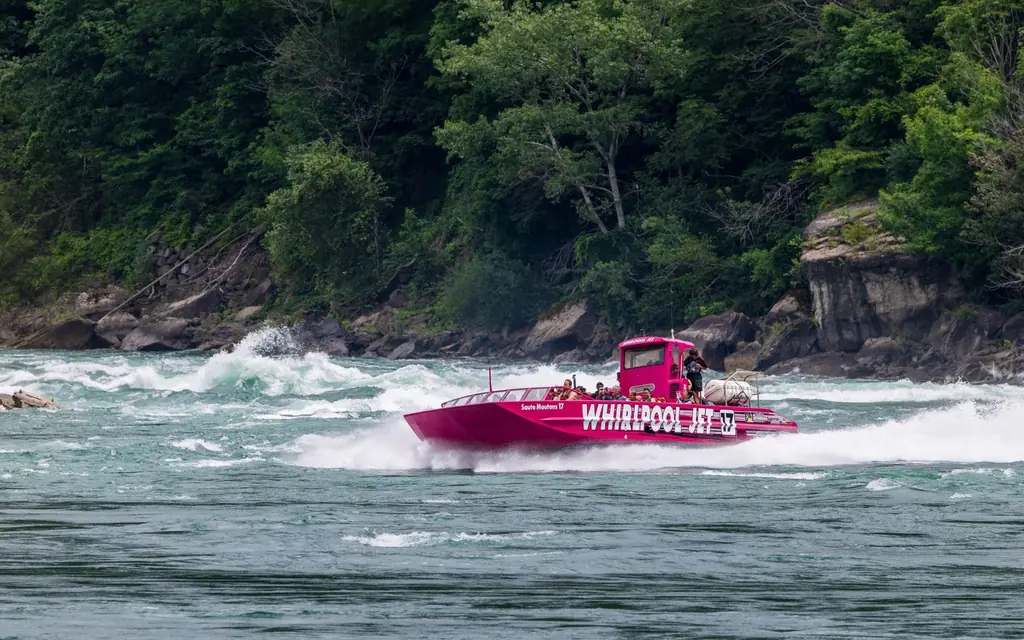
This is the rule that matters most, and the one people break for a photo. The current above the Falls and in the gorge below is extremely strong. Niagara Parks describes the Whirlpool Rapids beside the White Water Walk as Class 6 rapids running at about 48 km/h. A fall into the river anywhere along this stretch is a life-threatening emergency.
- Stay behind every railing and wall, at Table Rock, along Queen Victoria Park and at the gorge lookouts. Climbing on or over them for a better angle is how serious accidents happen.
- Watch children closely near the edge; a low wall that an adult leans on can be a step for a four-year-old.
- Expect wet stone. Spray from the Horseshoe Falls drifts across the walkway at Table Rock. Wear shoes with grip and take the stairs and slopes slowly.
Hiking the gorge: daylight, marked trails, a friend
The trails into the Niagara Glen and along the gorge are among the best things in the region, and among the most demanding. Niagara Parks allows hiking in the Glen only between sunrise and sunset, and closes sections for maintenance; in fall 2026 part of the Terrace Trail and the whole Whirlpool Trail were closed. Niagara Falls Tourism's hiking tips are worth reading before you go. In short:
- Hike only on clearly marked trails and obey posted signs.
- Stay away from the water; the current is very dangerous.
- Know your limits: every step down is a step you will have to climb back up.
- Go with a friend, and only in daylight.
- Research the route and dress for it, with water and proper footwear.
If you are hiking, tell your chauffeur which trailhead you will finish at, so the car is waiting at the right one.
Weather: summer heat, winter ice
Niagara's weather is not extreme, but visitors from warmer or cooler climates are sometimes caught out. Environment and Climate Change Canada's long-term averages for the Niagara Falls station put the typical January high just below freezing and the low around −8 °C, with heavy snow possible. July highs average about 27 °C, with several days a year above 30 °C.
- Winter: spray from the Falls can coat nearby railings, steps and paths with ice. Walk slowly, use the flattest routes, and wear winter boots. Our guide to visiting Niagara Falls in winter covers what is open and how to dress.
- Summer: bring water and sun protection for long walks along the river; the paths offer patches of shade but not much.
- Driving in winter: Ontario advises four winter tires, and Ontario 511 shows road conditions and closures.
Book a licensed car for your visit
Scams and traps to know about
None of these is unique to Niagara, but each comes up often enough to mention.
Toll-payment text messages. The Niagara Falls Bridge Commission warns on its border-crossing page that it does not ask for unpaid balances by text message. If a text claims you owe a bridge toll and gives a link, delete it.
Unofficial "guides" and ticket sellers. Buy attraction tickets from the operator, Niagara Parks, or the official website of the attraction. Be wary of anyone on the street offering cheaper boat or tunnel tickets.
Unlicensed rides. In the Niagara Region, vehicles for hire are licensed by the Region: limousines and other specialty vehicles under By-law 2021-58, taxis and rideshare under a separate by-law. Niagara Region's business licensing page explains the requirements, which include commercial insurance and driver background checks. A licensed limousine carries the company's name on exterior decals. If someone approaches you on the street or at a hotel door offering a "limo" ride for cash, decline.
Rideshare checks. Before you get in any app car, match the licence plate, the vehicle and the driver's name to what the app shows, and sit in the back.
Is Niagara Falls safe at night? Getting around after dark
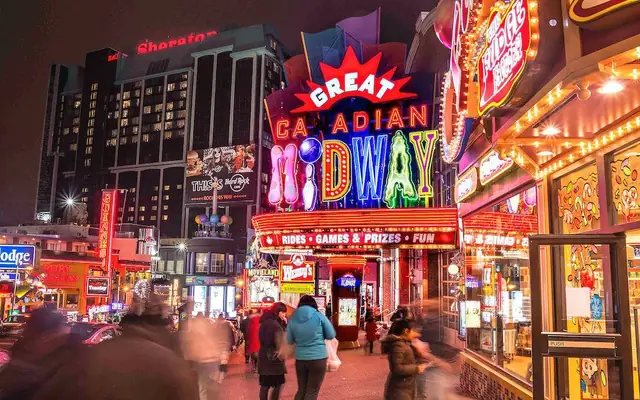
The Falls are lit every night of the year, until 2 am for most of it, and the area around Queen Victoria Park, Clifton Hill and the Fallsview hotels stays busy late, especially in summer. Getting back to your hotel is rarely the problem. The tricky cases are:
- Late returns from Niagara-on-the-Lake or wine country, where taxis and rideshare cars can be scarce after dinner.
- Holiday nights. On Canada Day and New Year's Eve in 2026, Niagara Parks closed the Parkway between Clifton Hill and Fraser Hill from 7 pm to about 1 am, and Clifton Hill closed too. Plan pickups outside the closure.
- After the casino or a club. Both casinos and the nightlife district are 19+. If you are staying out late, arrange the ride home before you go. Our nightlife and clubs guide lists drop-off points.
A pre-booked car takes the guesswork out. The chauffeur is waiting at an agreed point, the fare was fixed before you paid, and nobody has to search for a ride at 1 am. See why a pre-booked car beats waiting for a taxi.
The law in brief: alcohol, cannabis and seatbelts
- Drinking age: 19 in Ontario, 21 in New York.
- No drinking in vehicles. Ontario's Liquor Licence and Control Act forbids having open liquor in a vehicle, and Niagara Region's by-law forbids a licensed driver to permit alcohol consumption in the vehicle. That applies to our cars, too. The chauffeur never drinks.
- Cannabis is legal in Canada but illegal to take across the border in either direction, whatever the amount and even with a medical authorization.
Seatbelts and car seats
Ontario law requires every driver and passenger to wear a seatbelt, and children must be in the correct car seat or booster for their weight and height. A child may use a seatbelt alone from age 8, 36 kg or 145 cm. Child, toddler and booster seats can be added in our booker; tell us the children's ages and we fit the right seats before pickup.
Border crossings: documents and devices
Crossing between Canada and the United States is routine, but it is a legal process, not a formality. Every traveller, including children, must carry their own valid documents. See documents for entering Canada.
Global Affairs Canada's travel advice for the United States notes that US border officers may search electronic devices and ask for passwords, and that a Canadian pardon is not recognized under US law. Answer questions directly and declare what you carry.
Chauffeur vs rideshare vs taxi for this trip
| Way to go | Door-to-door time | Cost note | Luggage | Best for |
|---|---|---|---|---|
| Walking | Short distances between Fallsview, Table Rock and Clifton Hill | Free | None | Well-lit, busy evening routes |
| WEGO visitor bus | Fixed stops; evening service varies by season | Adult 24 h $16 (as of 2026) | Day bags | Daytime touring |
| Rideshare | Minutes in town; scarce in wine country late at night | App price; surge on busy nights | One car's worth | Short hops in the tourist areas |
| Licensed taxi | Rank or dispatch wait | Metered | Sedan or minivan | A ride from a taxi stand when you need one now |
| Pre-booked chauffeur (NiagaraFallsLimo.net) | Waiting at an agreed point | Fixed fare via booker, shown before you pay | By vehicle class | Late nights, wine country, families with car seats, solo travellers |
Verdict. In the main tourist areas, walking between busy, lit streets is perfectly reasonable, and a licensed taxi or a rideshare is fine for a short hop. Where a pre-booked chauffeur makes the clearest safety difference is the late return from Niagara-on-the-Lake or the casino, a solo traveller arriving at night, and families who need car seats fitted properly. The chauffeur vs taxi vs rideshare guide goes into the trade-offs.
Booking it with NiagaraFallsLimo.net in 3 steps
- Enter the pickup and drop-off in the online booker: hotel, restaurant, winery or terminal, with date and time, and a flight number if you are arriving by air.
- Choose the vehicle class, from a Standard Sedan for up to 3 to an Executive Sprinter for up to 12. The fixed fare appears beside each one.
- Add passengers and extras, such as child seats or meet and greet, then pay securely and keep the confirmation email.
Reserve a ride home for tonight
Who it suits
Individuals, especially solo women and first-time visitors from abroad, often book a car for the late-night return; see our page for individual travellers. Couples tend to plan the evening around the illumination and want a pickup when it ends. Families benefit from fitted child seats and a known driver. Groups heading out for a celebration keep everyone together in one vehicle instead of scattering into several apps at 2 am.
Further reading: solo travellers in Niagara Falls, chauffeur licensing and safety in Ontario: questions to ask, and taxi numbers vs pre-booked cars.
Frequently asked questions
Is Niagara Falls safe at night?
The main tourist areas, around Queen Victoria Park, Clifton Hill and the Fallsview hotels, stay busy and lit late into the evening, especially in summer, and are generally safe for walking. Avoid gorge trails after dark, stick to busy streets, and arrange your ride home in advance if you are returning late from wine country or the casino.
Is the Canadian or American side of Niagara Falls safer?
Both tourist areas are busy, patrolled public spaces, and the same common-sense rules apply on each side: stay behind railings, keep to lit areas at night and use licensed transport. If you cross between them, every person needs valid documents for the border.
What is the biggest danger at Niagara Falls?
The river. The current above the Falls and in the gorge is extremely fast, and the Whirlpool Rapids run at about 48 km/h. Serious accidents usually involve people climbing over railings or leaving marked trails. Stay behind barriers, keep children close and hike only on signed paths in daylight.
Are taxis and rideshares safe in Niagara Falls?
Yes, when licensed. Niagara Region licenses taxis, rideshare and limousines, with insurance and driver checks. Check the plate and driver against your app, and never accept a cash ride from someone who approaches you on the street. A pre-booked chauffeur confirms the vehicle and fare in advance.
Can you drink in a limo in Niagara?
No. Ontario law prohibits open liquor in a vehicle, and Niagara Region's vehicle-for-hire by-law forbids drivers to permit alcohol consumption in the vehicle. NiagaraFallsLimo.net does not allow drinking in its cars. If you want to mark an occasion, a sealed bottle can be ordered through the booker and taken away unopened.
Is the Niagara Glen safe to hike?
Yes, for prepared hikers on marked trails in daylight. Niagara Parks allows hiking only between sunrise and sunset. The stairs and rocky paths are steep, so wear proper footwear, carry water, hike with a friend and check for closed sections, such as the Whirlpool Trail in fall 2026.
What should I do if I get a text saying I owe a bridge toll?
Delete it. The Niagara Falls Bridge Commission says it does not ask for unpaid balances by text message. Tolls on its bridges are paid at the booth when entering Canada, and the Peace Bridge is cashless at its toll booths.