
For many people who have just moved to Ontario, Niagara Falls is the first trip outside the city that feels like a real Canadian day out. Colleagues mention it, relatives back home ask for photos, and children want to see the boats in the mist. This guide is for newcomers to Canada planning that first visit: permanent residents, students, workers on permits and families who arrived this year.
We are NiagaraFallsLimo.net, a pre-booked chauffeur service in Niagara, and we will say plainly when a train or bus is the smarter choice.
Do newcomers need any documents to visit Niagara Falls?
No border is involved if you stay on the Canadian side. Niagara Falls, Ontario is about 129 km (80 mi) from downtown Toronto, usually 1 h 30 – 1 h 45 by car off-peak. Papers matter only if you cross into the US. NiagaraFallsLimo.net shows a fixed fare in its online booker before you pay.
That is the most useful fact for a first trip. The Horseshoe Falls, Table Rock, Clifton Hill, the Fallsview hotels and the wineries of Niagara-on-the-Lake are all in Ontario. You can spend a full weekend without going near a border booth. The bridges matter only if someone wants to stand on the American side, which we cover below.
What a first visit on the Canadian side looks like
Most first-timers do the same loop, and it works well:
- Table Rock and the brink of the Horseshoe Falls. This is the closest public viewpoint to the largest of the three falls. It is free to stand there.
- Queen Victoria Park. A long, free promenade facing the American Falls and Bridal Veil Falls, with gardens and benches.
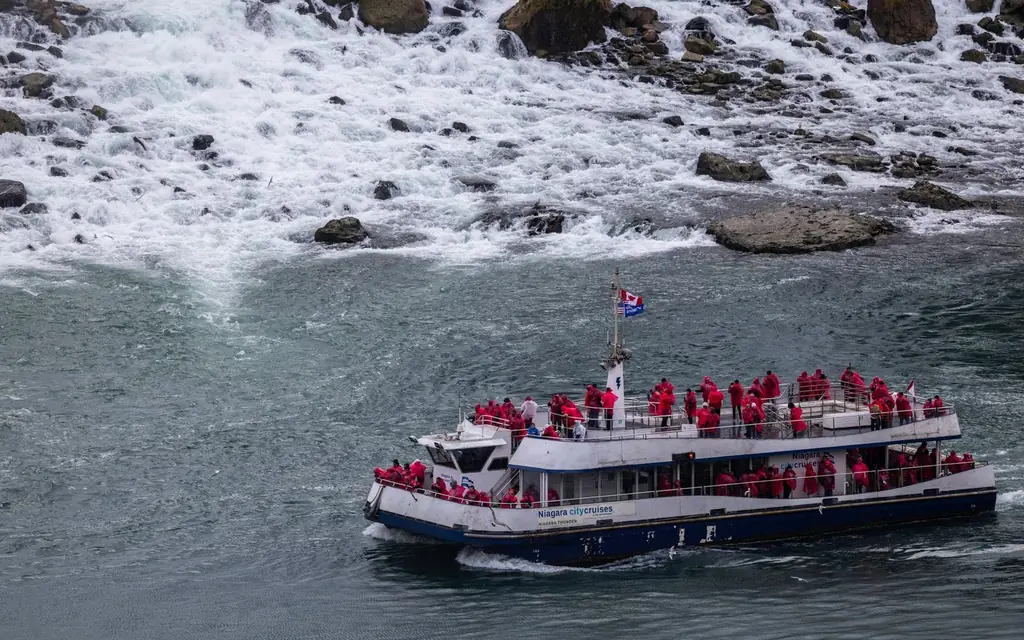
- A boat into the mist. Niagara City Cruises leaves from the Canadian side of the gorge. It is seasonal, April to November.
- An evening walk. The Falls are lit in colour every night of the year.
- A second day further north. Niagara-on-the-Lake is about 20–25 km (13–15 mi) north along the Parkway, roughly 30 minutes by car, with old streets, theatres and wineries.
With one day, keep to the first four. Our Toronto to Niagara Falls route page explains the highway and timing in more detail.
Thinking about crossing to the American side
This is where newcomers need to be careful, because rules for permanent residents and permit holders are different from the rules your Canadian-born neighbours follow.
Canadian citizens can usually enter the US with a passport or another accepted document. Permanent residents of Canada are not treated as Canadian citizens at the US border. Global Affairs Canada's travel advice for the United States says Canadian permanent residents may need a non-immigrant US visa, which must be obtained before entry, and must also carry a valid passport from their country of citizenship. The same page notes a US proclamation restricting entry for some nationalities took effect on January 1, 2026.
A few practical points follow from that:
- If your passport is from a Visa Waiver Program country, you would generally need an approved ESTA instead of a visa. Check the details for your nationality before you travel.
- If your passport is from a visa-required country, the US visa comes first. There is no way to sort this out at the bridge.
- Coming home matters too. IRCC's page on permanent resident status says that when you return on a commercial vehicle, such as a plane, train or bus, you must show your PR card and your passport. If your card has expired, it says to apply for a permanent resident travel document first. Our advice: carry both, whatever vehicle you return in.
- Students and workers on permits should check that their Canadian permit and visa allow re-entry before leaving.
Our pages on documents for entering the USA and international visitors at the Niagara border go through each case. If the paperwork looks complicated, stay on the Canadian side this time; the view of the American falls is better from Ontario anyway.
Every passenger in a car must carry their own valid documents. A chauffeur crosses the bridge with you, but cannot speak for anyone's admissibility, and nobody can promise how long a crossing will take.
Budgeting the day: what is free and what costs money
Ontario prices often surprise newcomers because tax is added at the till. Ontario's Harmonized Sales Tax (HST) is 13%, and many attraction prices are shown before it. Niagara Parks, for example, lists Niagara City Cruises at CA$47.95 for adults and CA$32.95 for children aged 3 to 12, plus 13% HST, with infants aged 2 and under free (as of 2026).
Things that cost nothing:
- Walking the Niagara Parkway from Table Rock to the Rainbow Bridge
- Watching the nightly illumination
- The fireworks over the Falls, in season (the 2026 series ran from May 15 to October 12 at 10 p.m.)
- The Winter Festival of Lights, free from November 14, 2026 to January 10, 2027, with donations accepted
- Looking around Niagara-on-the-Lake's main street
Things to budget for:
- Transport. This is usually the biggest single item. See the comparison below.
- Attractions. Pick one or two paid ones rather than everything.
- Parking, if you drive. Niagara Parks lots near the Falls charge by the hour or by the day.
- Meals. Food near the Falls costs more than it does a few blocks inland.
For families on the train, GO Transit's Kids GO Free policy lets children aged 12 and under ride free all year. That single rule changes the arithmetic for a family of four more than anything else.
Four realistic ways to get there from the Toronto area
GO Transit. GO trains run to Niagara Falls GO station on Bridge Street year-round, and GO sells GO+WEGO combo tickets that bundle the train with the WEGO visitor bus. The station is about 4.4–5.3 km (3 mi) from the Fallsview hotels, roughly an 8-minute drive. Read our guide to getting to Niagara by train and bus before you choose a departure.
Intercity bus. FlixBus lists at least 13 trips a day from Toronto, a minimum trip time of 1 hour 30 minutes and fares from CA$20.98 (as of 2026). Buses arrive at the Niagara Falls Bus Terminal on Erie Avenue or at Rapidsview, near the Falls.
Driving yourself. This makes sense only if you hold a licence valid in Ontario and feel comfortable on the Queen Elizabeth Way (the QEW, the main highway from Toronto to Niagara).
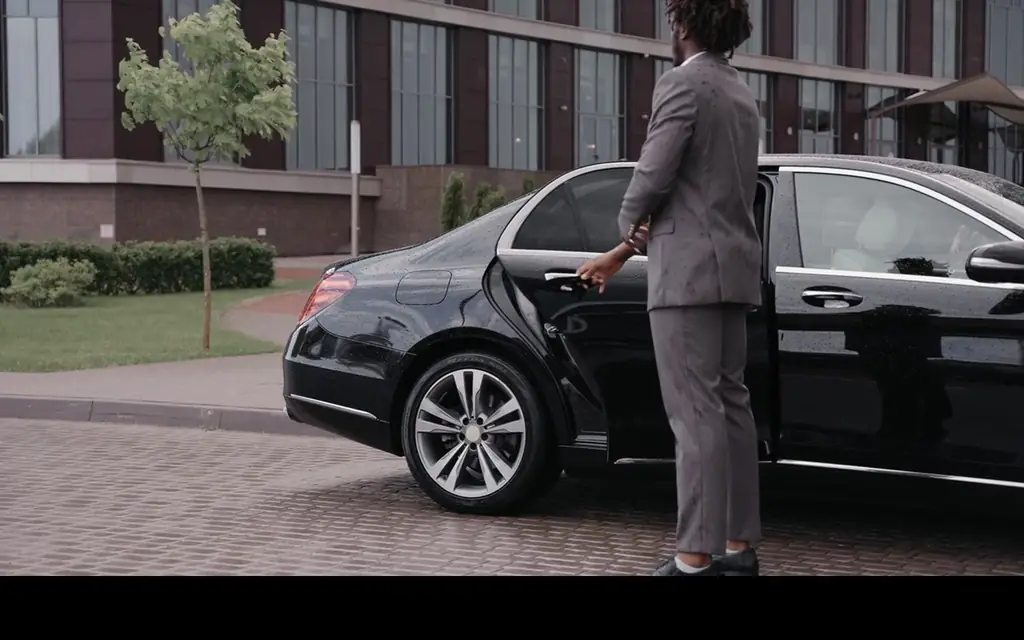
A pre-booked chauffeur. One car collects your family at home, the driver loads the bags and fits the car seats, and the fare is fixed before you book. It earns its place when you have small children, older relatives, luggage for a weekend, or a late return.
Chauffeur vs rideshare vs taxi for this trip
| Mode | Door-to-door time | Cost note | Luggage | Best for |
|---|---|---|---|---|
| GO train + WEGO | about 2.5–3.5 h including the station transfer | combo tickets from $22 (as of 2026); kids 12 and under free on GO | what you can carry | day trips with light bags |
| Intercity bus | about 2–3 h including the terminal transfer | from $20.98 (as of 2026) | one bag each, usually | solo travellers and students |
| Rideshare app | about 1 h 40 – 2 h off-peak | surge pricing can apply | depends on the car that arrives | one or two adults, no car seats |
| Taxi from Toronto | about 1 h 40 – 2 h off-peak | metered or quoted by the company | sedan trunk | short notice |
| Driving yourself | about 1 h 30 – 1 h 45 off-peak, plus parking | fuel, parking, possible 407 ETR tolls | your own car | confident drivers with an Ontario-valid licence |
| Private chauffeur | about 1 h 30 – 1 h 45 off-peak, home to hotel door | fixed fare via booker | sized to your group | families, car seats, older relatives, late returns |
The honest verdict: for a young couple or a student with a backpack, the GO train or the bus is fine and costs less. A rideshare is also fine for two adults with no car seats who do not mind a possible surge.
A pre-booked car wins when the group includes a baby or toddler, when grandparents are visiting from abroad and walking is limited, when there are suitcases for a weekend, or when you will come home after the last train. It also removes the station-to-hotel step, which is the part families find hardest. Our comparison of chauffeur, taxi and rideshare goes deeper.
Travelling as a family: seats, seatbelts and older relatives
Ontario's car seat law applies the moment children are in a car. The province's child car seat guidance sets out rear-facing seats up to 9 kg, forward-facing seats from 9 to 18 kg, and boosters for children under 8 who weigh 18 to 36 kg and are under 145 cm. Many newcomer families have not yet bought every stage of seat. Our booker lets you add child, toddler and booster seats to the reservation, so they are fitted before you get in.
If parents or grandparents are visiting from abroad, plan the day around short walks. The Falls Incline Railway links the Fallsview hotel area with Table Rock, and a car can stop at the Table Rock area so nobody walks the hill. A wheelchair option is also in the booker, and trained service animals are welcome. Our page for families has more ideas, and the journal post on one van for three generations is written for exactly that group.
Booking it with NiagaraFallsLimo.net in 3 steps
- Tell the booker where and when. Enter your home or apartment address in the GTA and your hotel or Table Rock as the drop-off, with the date and time. Choose a return trip if you want to be collected in the evening.
- Pick the vehicle. Each class shows its fixed fare. A Standard Sedan takes up to 3 passengers and 2 large bags; a Standard SUV such as a Suburban or Yukon XL takes up to 6 with 6 bags.
- Add the details and pay. Enter passengers, bags and any child seats, pay securely, and the confirmation arrives by email.
Plans change, so know the cancellation terms. Counted from the scheduled pickup, more than 72 hours' notice costs nothing; 72 hours or less is 10%; 48 hours or less is 50%; and 24 hours or less, or a no-show, is 100%. Our step-by-step booking guide explains each screen.
Who this trip suits
Individuals new to the country often go by bus first, then return later with visitors. Couples can make it a quiet overnight, with the illumination one night and Niagara-on-the-Lake the next morning. Families gain the most from planning transport carefully, because children change everything about timing. Groups of friends or relatives arriving from abroad can share one Executive Sprinter for up to 12 passengers and keep everyone together.
Small Ontario habits worth knowing before you go
- Prices are shown before tax. Expect 13% HST to be added to most purchases and tickets.
- Tipping is customary in restaurants and for many services. It is a personal choice, not a fee.
- Alcohol is sold at the LCBO (the provincial liquor store) and some grocery stores, and the legal drinking age in Ontario is 19. Open alcohol is not allowed in vehicles, including ours.
- The mist soaks clothes even on sunny days, so bring a light layer.
If you are watching spending closely, the journal post on Niagara Falls on a budget vs Niagara Falls in comfort compares two versions of the same weekend, and what most first-time visitors get wrong will save you a few mistakes.
Frequently asked questions
Do I need a passport to visit Niagara Falls, Ontario?
No, not if you stay on the Canadian side. Niagara Falls, Ontario is inside Canada, so there is no border check on the drive or train from Toronto. Carry normal photo ID. A passport, and possibly a US visa, matters only if you plan to cross one of the bridges into New York State.
Can permanent residents of Canada visit the American side?
Often yes, but not with a PR card alone. Global Affairs Canada says Canadian permanent residents may need a US non-immigrant visa obtained in advance, plus a valid passport from their country of citizenship. Nationals of Visa Waiver countries generally need an ESTA. Carry your PR card and passport to return to Canada.
What is the cheapest way for newcomers to get to Niagara Falls?
For one or two adults, the intercity bus or GO train usually costs least. FlixBus lists fares from $20.98 (as of 2026), and GO+WEGO combo tickets start from $22. Children aged 12 and under ride GO free. A chauffeur costs more, but the booker shows the fixed all-in fare before you pay.
How long does it take to get from Toronto to Niagara Falls?
By car, about 129 km (80 mi) from downtown Toronto, usually 1 h 30 – 1 h 45 off-peak; allow 2 hours or more on a summer Friday. VIA Rail lists an average of about 2 hours on the train. Add the time to reach the station and the transfer from the Niagara Falls station to your hotel.
Is Niagara Falls worth visiting in winter for a first trip?
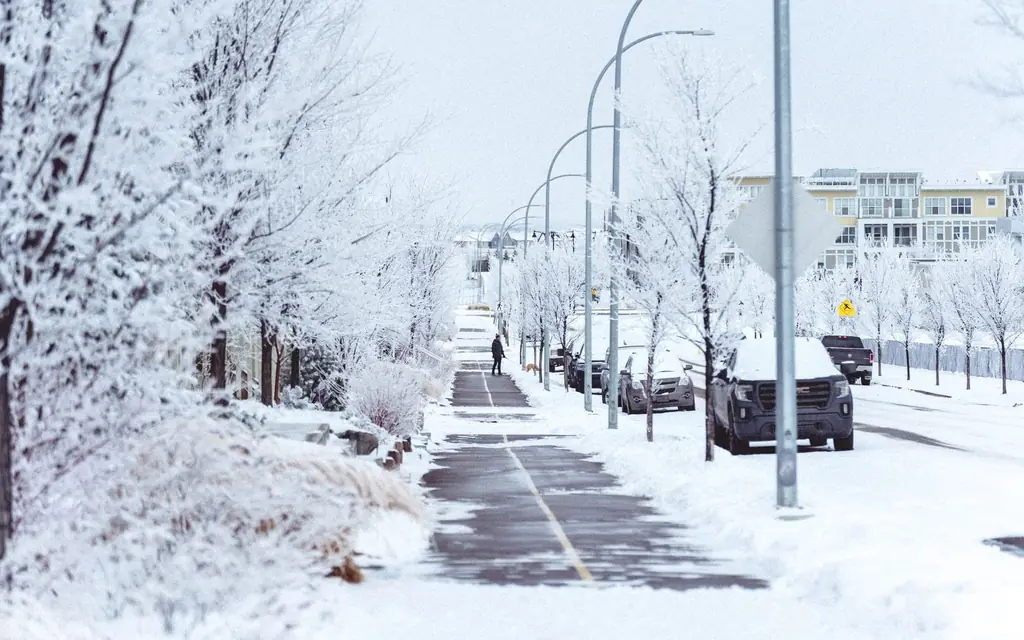
Yes, if you dress for it. The Falls are lit every night of the year, and the free Winter Festival of Lights runs from November 14, 2026 to January 10, 2027. Some outdoor attractions close for the season, including the boat tours, so check what is open before you plan the day.
Can a chauffeur bring child seats for my children?
Yes. Child, toddler and booster seats are options in the NiagaraFallsLimo.net booker. Add them when you enter passenger details so the right seats are fitted before pickup. Ontario law requires children to ride in a seat suited to their weight and height until they are big enough for a seatbelt alone.