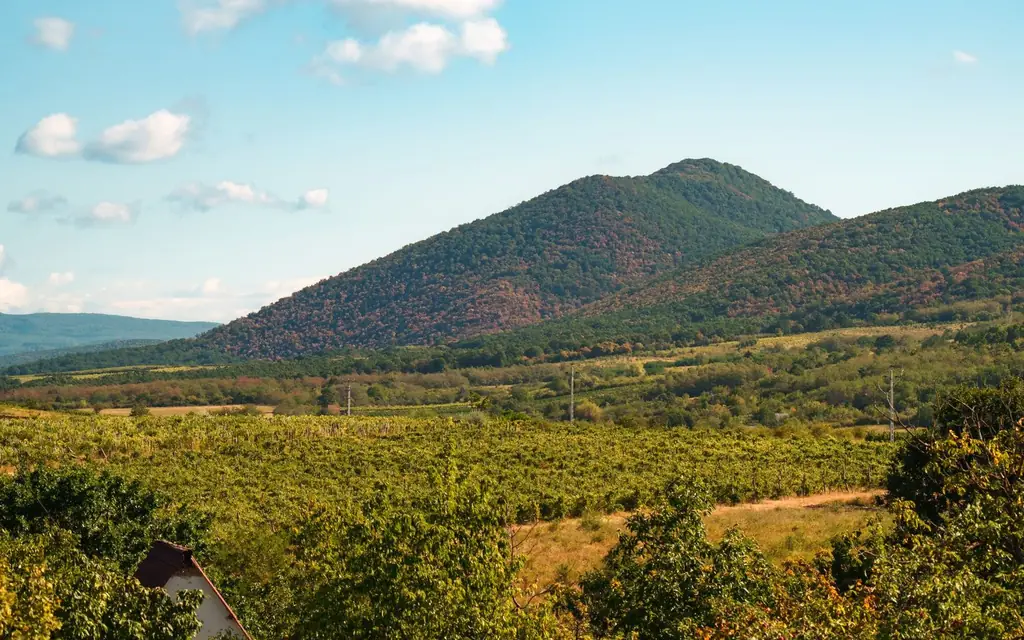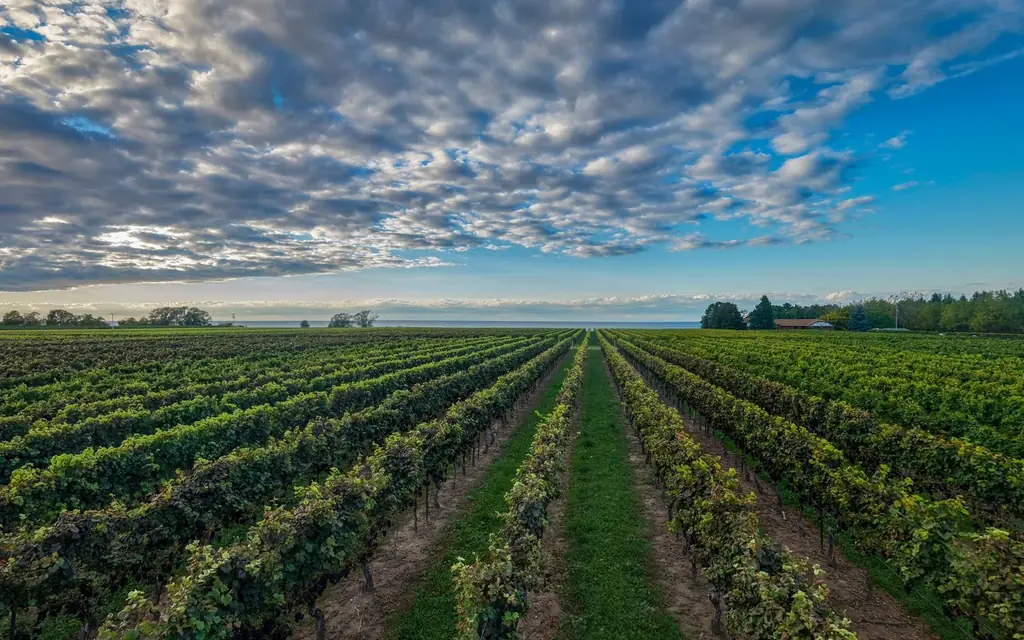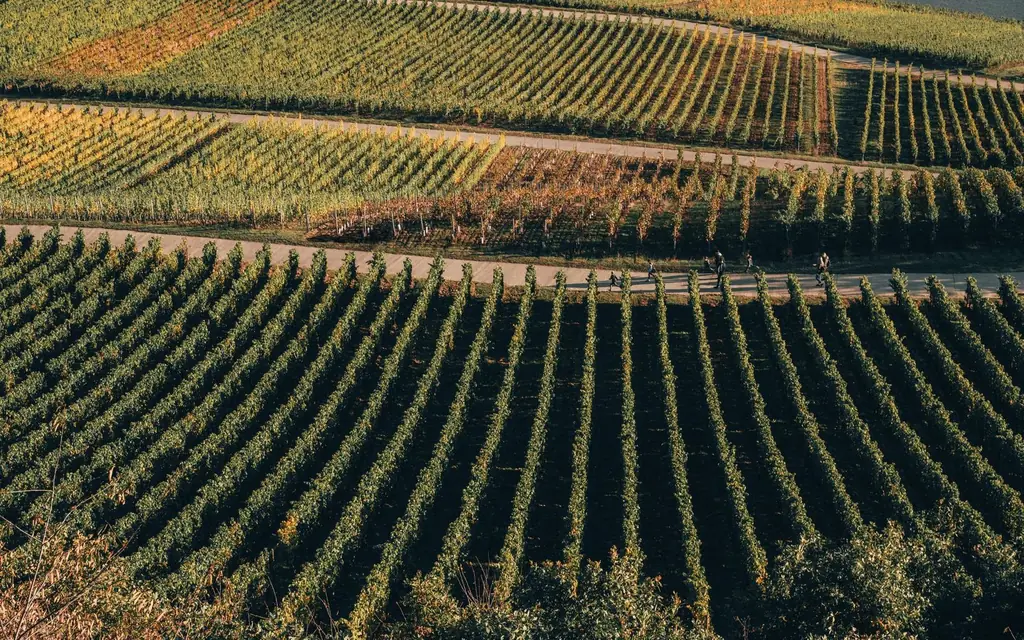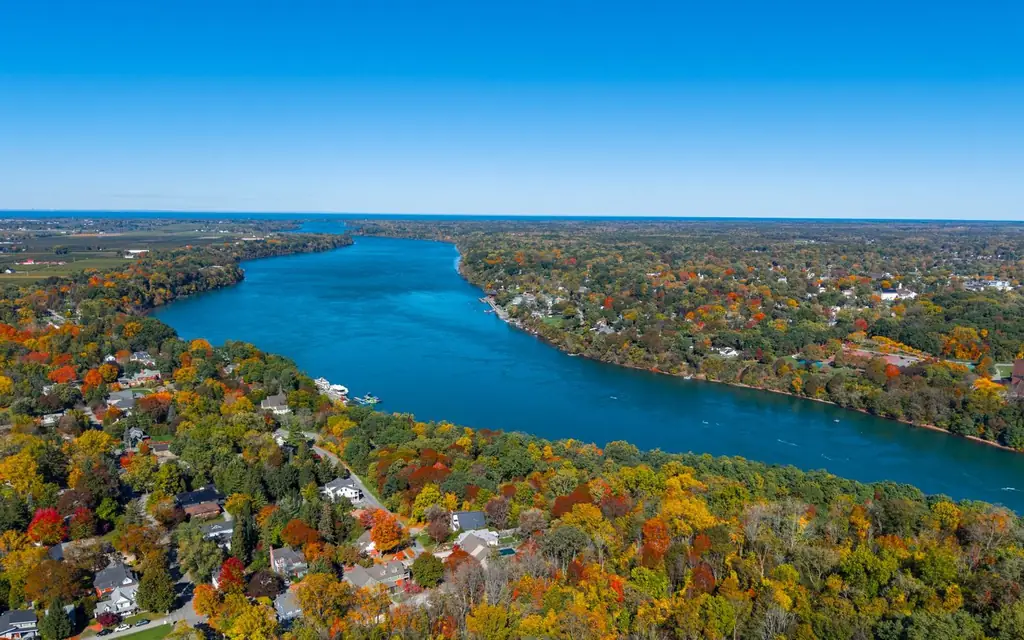

Look at a map of Niagara-on-the-Lake and the middle of it is a grid. Roads called Line 1, Line 2 and Line 3 run east to west; Concession 1, 2 and 4 run north to south; Niagara Stone Road cuts diagonally through the village of Virgil. Almost all of that grid is vineyard, home to the Four Mile Creek wineries and their sub-appellation.
For visitors who prefer red wine, this is the part of Niagara-on-the-Lake to spend time in. It is also the easiest wine country to drive, because the roads are straight and the wineries sit two or three kilometres apart. NiagaraFallsLimo.net chauffeurs often route a tasting day along the Lines rather than the busier main road, which keeps stops quick and the day calm.
What makes Four Mile Creek the red wine country of Niagara-on-the-Lake?
Four Mile Creek is the sunny central plain of Niagara-on-the-Lake, around Virgil, where flat land and warm days ripen full-bodied reds such as Cabernet Franc and Gamay. Its wineries are about 17–20 km (11–12 mi) from Fallsview, usually 20–30 minutes. NiagaraFallsLimo.net drives the Line roads by the hour from its online booker.
VQA Ontario describes Four Mile Creek as a fertile plain slightly inland from the lake and below the bench of the Niagara Escarpment. The land is nearly flat, with slopes facing every direction, so vines get sunshine from morning to evening. At night the canopy cools quickly, giving a wide gap between day and night temperatures. VQA calls it the most productive sub-appellation in the Niagara Peninsula, and its 2025–26 factsheet says it is known for full-bodied red varieties.
Warm days, cool nights: the numbers in context
"Warm" here means sunshine and daytime heat rather than the warmest average over the season. Set beside its three Niagara-on-the-Lake neighbours, using VQA's 2025–26 factsheets:
| Sub-appellation | Growing degree days | July mean | Wineries |
|---|---|---|---|
| Niagara Lakeshore | 1,563 | 21.8 °C | 12 |
| Four Mile Creek | 1,582 | 22.6 °C | 15 |
| Niagara River | 1,606 | 22.6 °C | 5 |
| St. David's Bench | 1,637 | 22.5 °C | 7 |
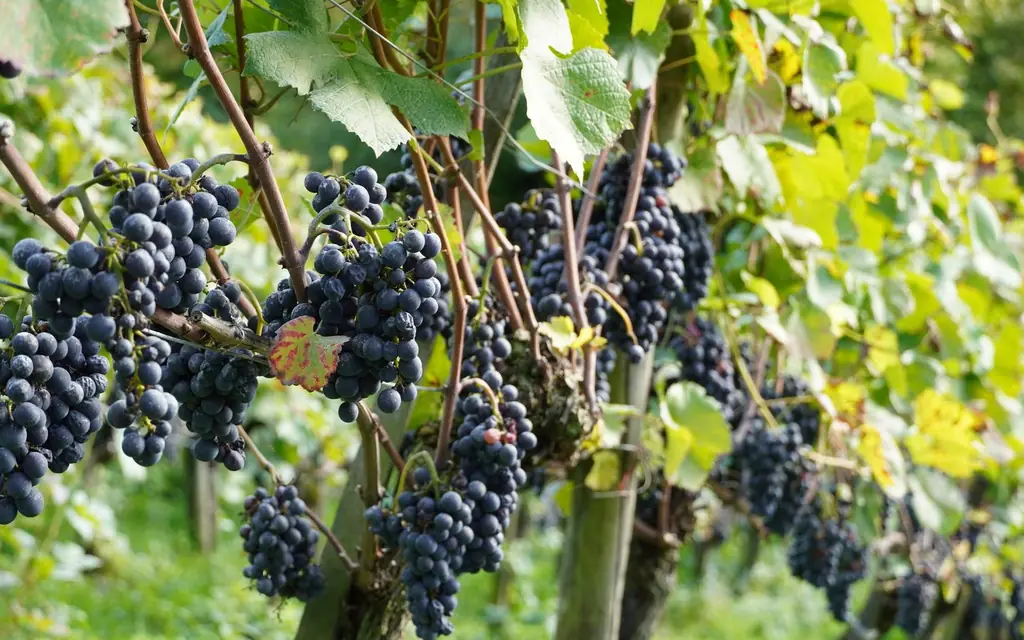
Four Mile Creek shares the highest July mean in the group, and it has the most wineries. Its common varieties, per VQA, are Gamay Noir, Chardonnay, Cabernet Franc and Riesling, though the plain is welcoming enough that growers plant almost everything. VQA describes the reds as ripe, with blue and black fruit and sweet, balanced tannins, and the whites as medium to full-bodied with tropical notes.
The soil explains the rest. Under the vineyards lies the red shale of the Queenston Formation, covered mostly by Halton Till, a rich clay loam that holds water well into late spring. That reserve carries vines through dry July and August weather. The landscape has one hidden feature: the valley of Four Mile Creek is a buried former valley of the Niagara River.
The frost fans you will see from the car
On a winter or spring drive along the Lines you will notice tall, propeller-topped towers standing in the vineyards. VQA notes that growers in Four Mile Creek have tamed the risk of spring and autumn frost with fans that circulate air among the vines. On a still, cold night the warmer air a few metres up is mixed down to the vines. They are worth pointing out to passengers who have never seen one.
Four Mile Creek wineries to know on the grid
These wineries either state that they are in Four Mile Creek or sit within its central grid. Where a winery makes the claim itself, we say so.
- Southbrook Vineyards, 581 Niagara Stone Road, near the QEW end of the road. Southbrook's history records the purchase of a 74-acre parcel in the warm Four Mile Creek sub-appellation. It describes itself as certified organic and biodynamic and Regenerative Organic Certified. A natural first stop if you are arriving from the highway.
- Marynissen Estates, 1208 Concession 1. Its member listing says the estate, in the Four Mile Creek sub-appellation at the base of the escarpment, was home to the oldest commercial planting of Cabernet Sauvignon in Canada. Walk-ins are welcome; groups of more than six should email ahead.
- Bella Terra Vineyards, 925 Line 2 Road. The Puglisi family has farmed this 50-acre grape farm since 1974, and it describes itself as set among the vineyards of Four Mile Creek. Its Bella Terra Tasting is listed at $24.95 per person as of 2026.
- Between the Lines, 991 Four Mile Creek Road. A family winery in what it calls the Big Red Barn, known for an approachable core range and a reserve collection.
- Pillitteri Estates Winery, 1696 Niagara Stone Road in Virgil. Large, family run, with free daily public tours of the barrel cellar and a deep icewine list.
- Byland Estate Winery, 834 Line 3 Road, and Dandor Estate Winery, 780 Concession 2 Road, two small newer producers making estate wines from their own vineyards.
Price a Four Mile Creek tasting day
Routing a day of Four Mile Creek wineries along the Lines
The distances between these wineries are short, which is what makes the grid so easy:
- Trius to Pillitteri along Niagara Stone Road: about 2 km, three or four minutes.
- Pillitteri to Bella Terra on Line 2: about 2.4 km, four minutes.
- Stratus, near Old Town, to Southbrook: about 8 km (5 mi), around 11 minutes.
- Southbrook to Château des Charmes on York Road: about 7.6 km, 9–12 minutes, a useful bridge if you want to finish on the St. David's Bench.
From Fallsview hotels, Southbrook is about 17 km (11 mi), usually 17–25 minutes via the QEW. Pillitteri is about 18.5 km, 23–30 minutes via St. Paul Avenue and Regional Road 100. From Toronto Pearson, Southbrook is about 114 km (71 mi), usually 1 h 30 – 1 h 45 off-peak via Highway 403, the 407 ETR and the QEW. The 407 is an electronic toll road with no booths; it bills by licence plate, which is one reason visitors prefer not to drive it in a rental.
A sample red-focused day: Southbrook for organic Cabernet Franc, Marynissen for Cabernet Sauvignon history, lunch in Virgil or at a winery, then Bella Terra and Pillitteri. Four stops, all within about 10 km.
Reds to ask for, and how to taste them
A red-wine day goes better with a little order. Most tasting rooms pour whites first and then reds, light to full. On this plain, that usually means:
- Gamay Noir. Light, bright and low in tannin, and one of the varieties VQA lists as common here. A good first red for people who think they only like whites.
- Cabernet Franc. The variety many Niagara growers consider their signature red. Expect red and black fruit with a herbal edge; in a warm vintage from this plain it can be generous.
- Merlot and Cabernet Sauvignon, often blended. Sun-soaked sites like these are where Niagara has the best chance of ripening the later Bordeaux varieties fully.
- A reserve or back vintage, if offered. Many estates keep older bottles for the tasting room only, and a five-year-old Cabernet Franc shows how these wines age.
Two tips for buyers. First, ask about vintage differences: a cool year and a warm year from the same vineyard can taste like different wines. Second, decide before the day how many bottles the group wants to carry, so the vehicle class has room. Sealed bottles ride in the boot, never open in the cabin.
Best seasons for a red-wine route
Late September and October are the obvious choice, with harvest under way and the reds of the previous vintages released. Summer is green and busy, especially Saturdays. Winter is quiet, with frost fans standing still over bare vines and tasting rooms that have time to talk. The Niagara Icewine Festival season in January brings more visitors back. For autumn timing, our harvest season wine tours post has detail.
Booking it with NiagaraFallsLimo.net in 3 steps
- Pickup and first winery. Enter your hotel or home, the first stop (Southbrook works well from the QEW), the date and start time, and choose "By the hour".
- Vehicle class. Pick from sedan, SUV, Sprinter or stretch. Each shows a fixed fare. If the group plans to buy reds by the case, choose a class with real boot space.
- Details and payment. Passengers, any child seats, a second pickup if needed, then secure payment. Confirmation comes by email.
Our Niagara wine tour limo page explains how hourly wine days work, and the booker lets you compare classes before paying.
Chauffeur vs rideshare vs taxi for this trip
| Mode | Door-to-door time | Cost note | Room for cases | Best for |
|---|---|---|---|---|
| Private chauffeur | Waits at each winery | Fixed fare via booker | SUV and Sprinter hold several cases | Red-wine buyers, groups, a full day |
| Rideshare | Pickups on rural Lines can take time | Surge pricing | Small | One winery from Virgil or Old Town |
| Taxi | Booked per leg | Metered | Small | A single return trip |
| Bicycle | 10–15 minutes between stops | Rental set by operator | None | Fit riders on flat roads in fair weather |
| Driving yourself | Quickest | Fuel | Your boot | A driver who will not taste |
Verdict, plainly: the flat grid is excellent for cycling, and a single winery visit by taxi or rideshare is fine. If the plan is four tastings and some serious red-wine buying, a chauffeur is the better tool. The car waits, cases stay in the boot, and nobody has to drive after the last pour. Drinking in the vehicle is not permitted.
Who this route suits
Individuals who collect red wine can spend a focused morning at two or three estates. Couples often choose an E-Class and a slower pace with a long lunch. Families visiting relatives in the region can fill an SUV and still have room for purchases. Groups get the most from a Sprinter, and the short hops between wineries keep everyone on schedule; see our page for groups.
Next door, the lake-cooled Niagara Lakeshore route and the escarpment-sheltered St. David's Bench wineries make good contrasts. For an all-in-one plan see our one-day wine tour itinerary, and if you are staying by the Falls, the Fallsview hotels page lists pickup points. The Niagara-on-the-Lake wineries hub covers the whole town.
Reserve your chauffeur for Four Mile Creek
Frequently asked questions
Where is the Four Mile Creek sub-appellation?
It covers the central plain of Niagara-on-the-Lake, slightly inland from Lake Ontario and below the Niagara Escarpment bench, around the village of Virgil. The farm roads called Line 1–3 and Concession 1–4 cross it. Elevation runs from about 89 to 105 metres.
What wine is Four Mile Creek known for?
VQA's 2025–26 factsheet says Four Mile Creek is known for full-bodied red varieties, and lists Gamay Noir, Chardonnay, Cabernet Franc and Riesling as common. Marynissen's estate was home to Canada's oldest commercial Cabernet Sauvignon planting.
How many wineries are in Four Mile Creek?
VQA counted 15 wineries for 2025–26, the most of the four Niagara-on-the-Lake sub-appellations. Southbrook, Marynissen and Bella Terra describe themselves as being in Four Mile Creek.
How far is Four Mile Creek from Niagara Falls?
The nearest wineries, such as Southbrook, are about 17 km (11 mi) from Fallsview hotels, usually 17–25 minutes via the QEW. Wineries in Virgil are about 18–20 km, 23–30 minutes via Regional Road 100.
Why are there giant fans in the vineyards?
They are wind machines. VQA notes that Four Mile Creek growers use fans to circulate air among the vines and reduce spring and autumn frost risk, by mixing warmer air from above down to vine level on cold, still nights.
Is Four Mile Creek good for a bike tour?
The land is flat and the wineries are close, so cycling is popular in fair weather. It is less practical if you plan to buy wine by the case or if the group includes people who do not ride. A chauffeured day handles both.
Do we need to book tastings in advance?
Many wineries recommend reservations, especially on weekends. Marynissen welcomes walk-ins but asks groups over six to email ahead. Pillitteri runs free daily public tours. Book your anchor winery first.